2027: 15 Warning Signals That Could Trigger an AI-Led Financial Shock
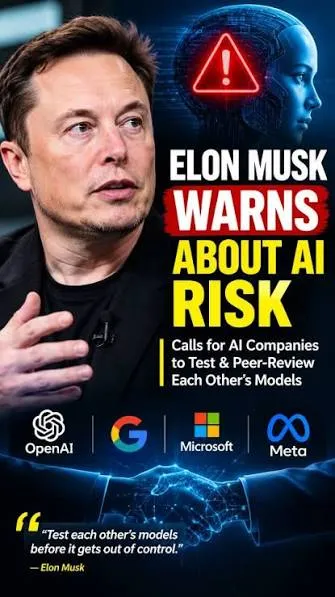
Elon Musk's concerns about an AI investment bubble — and why global investors should pay attention
SmartMoneyExpress | Sectoral Trends
The spectacular rise of Artificial Intelligence has triggered one of the largest investment booms in modern economic history. Trillions of dollars are flowing into AI chips, data centres, cloud infrastructure and computing capacity. But could the scale of investment be running ahead of actual demand?
In this article, we are highlighting Elon Musk's warnings about the risks ahead in 2027 highlights 15 interconnected vulnerabilities in the AI ecosystem. The central concern is that an AI infrastructure boom, if built on unrealistic demand assumptions and excessive debt, could evolve into a much broader financial shock.
The 15 risk signals
1. AI Infrastructure Overcapacity: Massive investments in computing infrastructure, GPUs and data centres could create capacity far in excess of actual demand. The industry risks building too much, too quickly.
2. An AI Investment Bubble: Sky-high expectations and aggressive capital allocation have inflated valuations across the AI ecosystem. A sharp correction could follow if earnings and commercial adoption fail to justify the optimism.
3. Neo-cloud Company Failures: More than 200 specialised AI cloud providers face potential financial stress. Companies dependent on expensive computing infrastructure and continued funding could struggle if demand or financing weakens.
4. Rising Debt Burden: AI infrastructure expansion is increasingly financed through borrowing. The growing debt burden could become unsustainable if revenue growth falls short of expectations.
5. Debt Default Risk: Companies unable to generate sufficient cash flows may struggle to service loans. Defaults could spread beyond individual AI businesses to lenders and investors financing the expansion.
6. GPU Depreciation and Value Erosion: Rapid technological advances and excess GPU supply could accelerate the loss of value of existing hardware. Assets purchased at premium prices may deliver significantly lower returns than anticipated.
7. Idle Data Centre Capacity: If infrastructure grows faster than AI adoption, expensive data centres could remain underutilised. Investors may find that projected returns on billions of dollars of capital expenditure fail to materialise.
8. Falling GPU Rental Prices: Excess computing capacity could trigger a sharp decline in GPU rental rates. This would compress margins and revenues for cloud operators whose business models depend on premium computing prices.
9. Private Credit Exposure: Private credit funds have substantial exposure to AI infrastructure financing. A wave of defaults could expose vulnerabilities in an increasingly important but less transparent segment of financial markets.
10. Banking Sector Vulnerability: Banks financing AI companies and infrastructure projects could face loan losses if borrowers default. The risk becomes more serious if credit exposure is concentrated across a small number of interconnected businesses.
11. Unrealistic AI Stock Valuations: AI-related equities are priced for extraordinary future growth. Any disappointment in earnings, adoption or profitability could trigger sharp valuation compression and significant equity market losses.
12. Hyperscaler Capital Expenditure Risk: Technology giants are committing unprecedented sums to AI chips, data centres and computing infrastructure. If monetisation fails to keep pace with spending, returns on capital could deteriorate and investor confidence could weaken.
13. Semiconductor Inventory Glut: Capacity expansion across the semiconductor industry could eventually create excess chip inventory. A reversal in demand could hurt chip manufacturers, equipment suppliers and emerging semiconductor ecosystems, including India's ambitions.
14. S&P 500 Contagion: An AI-led market correction may not remain confined to technology stocks. Through institutional portfolios, credit markets and investor sentiment, the shock could spread to traditional sectors and the wider S&P 500.
15. Systemic Financial Risk: The most serious threat is the possibility of a broader financial crisis. If AI-related defaults cascade through private credit, banks and other financial institutions, the consequences could extend well beyond technology markets and potentially threaten global financial stability.
SmartMoneyExpress Take: The Risk Is Not AI — It Is the Price of the AI Boom
The comparison with the 2000 dot-com bubble is worth considering. The internet transformed the global economy, but many companies and investors paid an enormous price for unrealistic expectations. AI could follow a similar pattern: the technology may ultimately revolutionise productivity, while a significant proportion of today's investments fail to generate adequate returns.
For investors, the distinction between the long-term AI opportunity and the short-term financial risks is critical. Companies with sustainable cash flows, defensible competitive advantages and disciplined capital allocation may emerge stronger, while highly leveraged infrastructure providers and overvalued businesses could face considerable pressure.
India may have a relatively smaller direct exposure to the massive AI infrastructure spending cycle in the US. That could prove advantageous in certain respects, although Indian technology stocks, semiconductor ambitions and financial markets will not be insulated from a global correction.
The key investment question for 2027 is no longer simply who will win the AI race, but who will earn an adequate return on the enormous capital being deployed to run it.
Editorial note: This article summarises the 15 risks presented. These should be treated as potential risk scenarios, not verified forecasts or a confirmed verbatim list of Elon Musk's statements.
Smart Money Express publishes financial journalism, not investment advice. Nothing here is a recommendation to buy or sell any security. Flow indicators describe observed institutional activity over a stated period; they are not ratings and carry no view on future prices. Do your own research or speak to a registered adviser.
Comments
No comments on this piece yet. Yours would be the first.
Leave a comment
Comments are read before they appear. Your email address is never published.
Please keep it civil and on the subject of the article. We remove anything defamatory, and we cannot answer questions about what to buy or sell.